A new regular has recently joined my diet: honey.
I normally eat one meal a day, centered on low-temperature-cooked meat, soft-cooked eggs, and frozen okra. I eat almost no staple foods such as rice, bread, or noodles.
Keeping that diet while adding honey during delivery shifts has made my physical condition even better. I feel more stable through long bicycle rides, and small changes in how I eat no longer seem to upset it as easily.
After repeatedly trying it, I’ve become fond enough of it to buy pure honey in 1 kg bottles through Amazon’s Subscribe & Save service.
I was already doing well before adding honey
I’ve tested different ways of eating in my own body for over twenty years. One meal a day and a meat-centered diet felt suitable early on, although during a period centered on meat, eggs, and cheese I also experienced severe constipation and appendicitis.
A major turning point this year was cooking meat at a low temperature. I felt lighter after meals and the following morning, tired less during long rides, and had energy left to want to write after work.
I described that in “Upgrading my meat-based diet: giving up the frying pan made life more comfortable”.
Later, I almost stopped buying frozen vegetables because my bowel movements remained normal. My body became heavy and tired easily. Initially I blamed the extreme heat, but returning okra clearly improved my condition. I recorded that in “Mugen Mode had actually been fading away”.
I also found that the large amounts of peanuts I’d been eating didn’t suit me, and removed them. That prompted me to stop the almonds, walnuts, and other nuts I’d eaten for years too. I now eat no nuts at all. I don’t miss them, and actually feel better without them.
Alongside those adjustments, stopping alcohol, sleeping, and cycling regularly made Mugen Mode quite stable. Honestly, I thought I might not need to think about food any further.
The broader picture is on the six habits that turned life with ¥4.55 million in debt into bliss.
Avoiding staples suited me, but dietary changes were awkward to reverse
I once tried eating carbohydrates such as rice and bread for several days in a row.
I could move normally on the first day, so I wondered whether my improved condition now meant carbohydrates were fine.
By the second and third days, recovery weakened and even the feeling of delivery work changed.
My legs moved normally, yet pedaling became boring. The pleasure I’d naturally received from deliveries repeated thousands of times began to fade.
I recorded the details in “A few days of carbohydrates disrupted Mugen Mode”.
That led me to decide that, at least for me now, not regularly eating staples such as rice and bread suited me better.
Still, there had been a slightly troublesome aspect to my meat-centered diet without staples.
While I ate as usual, I felt very well. But after several days of carbohydrate-rich food, suddenly returning to my usual diet sometimes caused headaches.
Trying breakfast or lunch in addition to my basic one-meal pattern also often left me feeling somewhat off.
Ordinarily I was doing well, but small changes in how I ate could make returning to normal awkward. There was a particular fragility to it.
I tried ice cream and soft drinks, but honey felt different
Because I cycle for long periods, I also tried getting carbohydrates during shifts from ice cream or soft drinks without changing my usual meal.
Sometimes they gave me energy, but there was also a peculiar feeling that my condition worsened. Energy-type soft drinks were rejected fairly quickly.
The next thing I tried was honey.
With honey, I’m less aware of the odd fluctuations I felt with ice cream or soft drinks. Rather than suddenly energizing me, it repeatedly seems to stabilize my body in a good state.
I now decant it into a small bottle to carry. Filled, it weighs about 45 g including the container, so it adds almost nothing to my load.
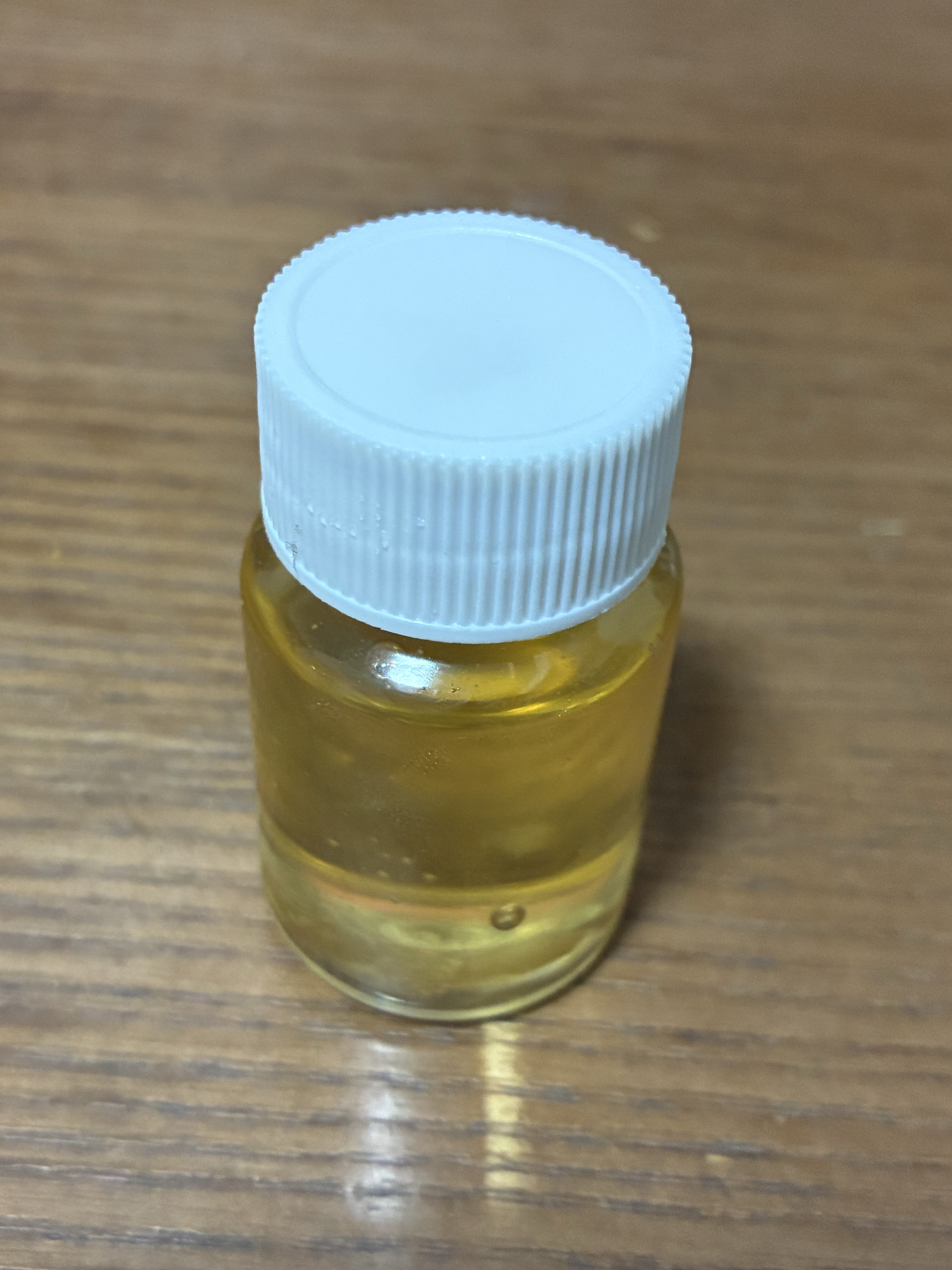
I usually take it in one go during work, and by the time I return, about two-thirds of the contents is gone. Since the starting weight includes the bottle, a generous estimate of what I actually eat is around 30 g a day at most.
Recently, I’ve been sipping black iced coffee while sucking honey directly from the bottle. I like the combination, and sometimes even feel more powered up.
Once is enough; I don’t keep wanting more. My basic meal pattern remains once a day.
The Japanese Ministry of Education’s food composition database lists honey as containing 81.9 g of carbohydrate per 100 g.
Honey contains sugars too, but the food, amount, and timing differ from several consecutive days of staples or sweets. With my present way of taking it, my condition actually feels more stable.
I don’t yet know whether honey has a particular effect or whether the amount and timing of carbohydrate simply suit my present activity.
For me, though, honey has been by far the easiest of the carbohydrate supplements I’ve tried to work with.
Incidentally, mine is very cheap, but honey apparently spans quite a price range. I often hear claims that cheap honey is no good or that only “real” honey offers health benefits.
I became curious about what “real” means and gathered what I found in “Is cheap honey no good? Looking into the conditions for ‘real’ honey” [Japanese].
A kilogram is heavy, so I ordered delivery from Amazon
This time, I bought 1 kg of honey priced at ¥622 through Amazon Japan’s Subscribe & Save. The subscription discount took off ¥62, delivery was free, and I paid ¥560.
Gyomu Super probably sells it for a similar price, but a kilogram is a noticeable weight. Having it brought home is easier, so I chose Amazon.
What I like about Subscribe & Save is deciding for myself whether to continue. Amazon Japan’s official guide explains discounts from the first order, changing delivery frequency, skipping, and cancellation.
I can try it once without deciding to keep buying and stop future deliveries if I no longer need it. That lack of pressure suits me.
If I decide to stop, though, I need to check the next order and dispatch status and act early. Prices and discounts also change, so I’ll check the displayed conditions when buying.
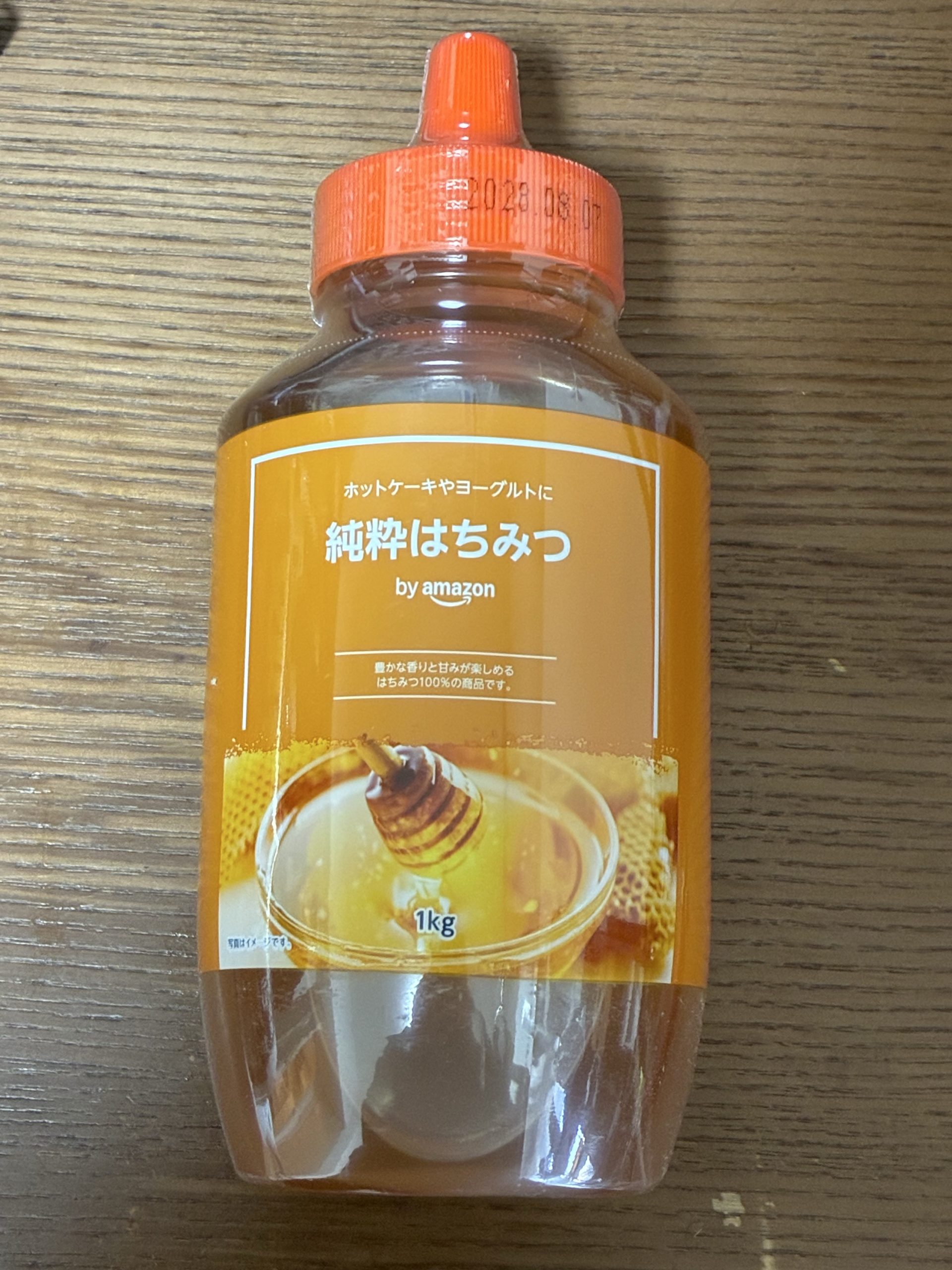
View the by Amazon Pure Honey 1 kg bottle on Amazon Japan (affiliate link).
My body feels more robust
Since eating honey regularly, I feel that changes in my diet don’t upset my condition as easily.
Although one meal remains the basic pattern, eating a little partway through the day when tired has become an easier option.
I notice a similar change with sleep.
I used to watch bedtime closely, thinking I had to sleep by a certain hour for the next day’s condition. Recently, going to bed somewhat later hasn’t made me as anxious.
I haven’t become immune to insufficient sleep. If I don’t sleep enough, I get sleepy, and long bicycle rides make me hungry.
But I can sometimes come home, eat a little of my usual meat, soft-cooked egg, and okra, and sleep for thirty minutes to an hour. That can restore a state in which activity feels good again.
Without an appetite, I stick to one meal as usual. I’m becoming able to insert food or a nap according to that day’s condition.
Even after occasional junk food, returning to my usual diet the next day feels easier.
If I become more sociable in future and end up eating pancakes with someone, for example, it doesn’t seem I’ll need to hesitate quite so much.
Previously, maintaining my best condition meant trying not to disturb food or sleep arrangements. Now I feel I can recover from some disruption, so I manage my overall life less minutely.
Alongside feeling physically good, I use less attention and effort to maintain it. That is another reason I feel my body has become more robust.
Alcohol, incidentally, still didn’t work
After adding honey and feeling better, I actually tried alcohol again.
Whenever meat, okra, or another change improved my condition, I’d sometimes think that perhaps this time the improvement could offset alcohol’s bad effects.
In this experiment, I didn’t feel as heavy as before and could move normally. I thought it might work, and drinking briefly returned to my life.
Ultimately, it didn’t. My body functioned reasonably, but how I felt during sleep and the next morning was clearly different from not drinking.
And I’m tired of the bother.
Thinking about moderation, checking my condition after drinking, and getting back to the former comfortable state: I’ve done enough of all that.
Life is enjoyable without alcohol, so I don’t need to deliberately bring it back. I decided to stop completely again.
I’ve changed my food many times. With alcohol, every test ends at the same conclusion: I’m more comfortable without it.
Surely I don’t need to test that again.
Eventually, I want to try removing honey too
At present, a diet centered on low-temperature-cooked meat, soft-cooked eggs, okra, and honey keeps me in very good condition.
I’m still eating the yogurt fermented for 36 hours that I’ve made for some time, although I honestly don’t know how useful it is. I don’t notice harm, but making it is a little troublesome, so I’m considering trying life without it.
Update, November 16, 2026: After finishing the yogurt I had prepared, I decided not to make any for a while. I explained it in “I’m trying life without my 36-hour yogurt”.
I’d also like to test removing honey eventually.
How would the current good state change? Would the headaches or fragility return, or would I carry on unchanged?
I won’t know without trying. For now, I like it, so I’ll continue a while.
After over twenty years of dietary experiments, repeatedly thinking I’d found the strongest approach, new foods still appear.
I meant to pursue meat eating further, then brought back okra, and now added honey.
What remains is inexpensive, readily available food of the kind sold at Gyomu Super. Even my cooking machine is a yogurt maker small enough to fit easily in a suitcase.
After years of experiments, familiar ingredients and one small machine have made life this comfortable.
Ideally, I’d like ingredients ordinary enough to find even in a small supermarket on a small Okinawan island.
If that is enough to keep me moving well every day, maintaining the diet after a move should be easier.
Still, regularly ordering pure honey by the kilogram wasn’t a development I could have predicted.


コメント