Recently, I deliberately drank for a few days as an experiment. I’d done something similar before and felt worse afterward. So why drink again? The reason has to do with what I learned in between.
For a long time, alcohol was the source of almost everything bad in my life. Drinking made my body heavy, unsettled my mental state, and made both work and writing feel like a chore. Stopping improved those things, so I considered alcohol the cause.
Then I made low-temperature-cooked meat a central part of my food, and my physical condition changed considerably. If I felt this good, perhaps I could drink now without a problem.
I tried it once and, as before, felt worse. I wrote about that in “It was my body, not the location, that made digital-nomad life possible”.
Normally, that would end the matter: alcohol had been the problem after all. But as I continued living mainly on low-temperature-cooked meat, there were periods when I didn’t feel particularly good despite not drinking at all.
So I examined the food more closely. Bringing back okra, which I’d removed, clearly improved my condition. Then stopping the peanuts I’d been eating in substantial quantities produced another change.
That raised a question about alcohol. In the past, I’d eaten large quantities of peanuts with my drinks. Was it right to attribute all the poor condition afterward to alcohol alone? Even without drinking, removing peanuts had changed how I felt.
Perhaps what I’d previously called the effects of alcohol included the effects of things I’d eaten alongside it. I wanted to separate those out once and find out. What would happen if I drank without peanuts or other nuts?
If I didn’t feel much worse, there might be no need to remove alcohol from my life completely. I like drinking. If there was a way to enjoy it without damaging my body or disrupting my life, I had no reason to rule it out altogether. That was what I wanted to check.
When I actually drank without peanuts, I didn’t feel as bad as before. There were mornings when the lightness in my body remained and I could move normally. That’s what made me think there might be room for alcohol itself.
I continued trying things, and this time drank again for several days. Afterward, I stopped and returned to the food and daily routine I currently think work best for me.
Gradually, my body grew lighter. Work became easier, and after a few days the improvement was clear. At around ten days, I reached a point where I felt I was largely back. But this time I learned something else: even after “largely back,” there was still more to come.
At ten days or so, I could live normally and work. The old me might have decided that I’d recovered. My current benchmark was somewhere else.
After that, my condition improved further. First, the mental feeling I call Mugen Mode clearly returned. Thinking about Mugen no Hamon became naturally interesting again, and I no longer resisted writing or considering what came next.
The following day, my body caught up too. I started delivering food in the morning and, before I knew it, had completed 22 consecutive deliveries without a single break.
Previously, I’d often wanted to rest after five to seven deliveries. That day, I hardly felt the need. I went home when it began to rain, but I hadn’t stopped because my body was at its limit. I even felt I could head back out after a while.
Only then did I think, “I’m back.” It had been about two weeks since my last drink.
This doesn’t mean drinking makes me unable to function properly for two weeks. I’d returned to ordinary daily functioning much earlier. The old me would probably have considered that sufficient recovery. Now, the benchmark itself has changed substantially.
Simply being able to work isn’t enough. My body has to feel light enough that I hardly want a break even after moving for hours. I need energy left to think and write afterward, to update Mugen no Hamon, and to take a natural interest in ordinary tasks. Only at that point do I feel fully back.
So rather than saying alcohol’s damage lasted two weeks, I think it’s more accurate to say it took roughly two weeks to return to the fairly high level I now use as my benchmark.
Even so, that’s a long time. Honestly, I thought I didn’t want to do it again. But those two weeks brought a fairly important discovery beyond the question of alcohol itself.
It’s only a bad spell, but it starts to look like “life”
If I feel bad for a day or two, I can think, “I’m not well right now.” That’s easier if I have an idea of the cause. Immediately after drinking this time, I could understand why I felt bad and expect to recover if I waited.
After about a week, things began to change. Although I was gradually improving, day after day I failed to regain the lightness I’d known. Work still felt like a chore, I didn’t want to write, and even thinking about Mugen no Hamon was less interesting.
For the first few days, I still knew that I was just going through a bad spell. But as that state continued and began to seem normal, the boundary grew less clear.
I stopped being “me in a bad state” and became simply “me.” The world I saw from that version of myself began to feel like the real one. That was stronger than I’d imagined.
The me in Mugen Mode starts to seem like the exception
When I’m in Mugen Mode, I don’t feel especially pessimistic about the future. My body is light and I can work. After long hours of movement, I still have enough capacity to think, develop and update Mugen no Hamon, write, and learn without much resistance.
In that state, I feel that I can simply keep going. I don’t need a great miracle. Repeating ordinary days will gradually reduce the debt, grow Mugen no Hamon, and build up my body, knowledge, and experience. There’s no particular reason to despair about the future.
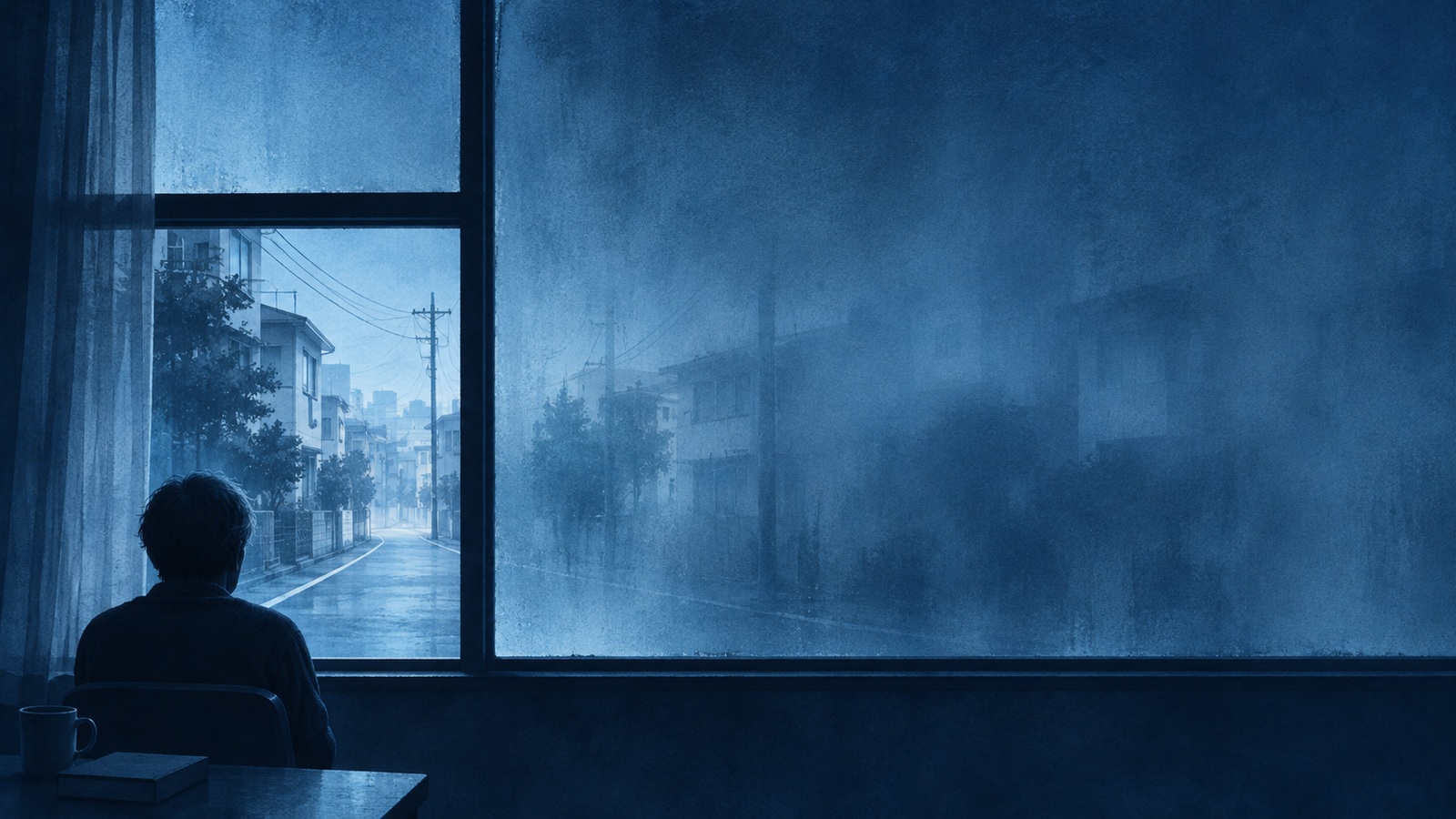
But after around a week in something close to what I call Destruction Mode, that whole premise starts to come apart. My body is heavy and work alone tires me out. I don’t feel like updating the blog. Even learning or thinking about something new feels troublesome.
Then I lose the feeling that I can simply continue building things. I know I was able to do so much before, yet that time seems strangely distant.
Eventually, my picture of the future is pulled toward questions like these: “Wasn’t that good state just temporary?” “Isn’t this the real me?” “Won’t things just keep being like this?”
It was quite an interesting experience. Almost nothing in the external reality had changed. The debt hadn’t suddenly increased. Mugen no Hamon hadn’t disappeared. I hadn’t suffered a major failure or abruptly lost my future options.
Yet just a change in my physical condition made life itself feel like something else.
Maybe I’m extending the present rather than seeing the future
What struck me strongly this time was that even when I think I’m considering the future, perhaps I’m simply extending my current state into it.
If my body is light, work isn’t painful, I can write, and the blog keeps moving, I think, “I can keep going like this.” If I spend a week feeling heavy, finding everything troublesome, and not even wanting to touch Mugen no Hamon, I begin to feel, “Maybe this is all the future will be.”
The future itself doesn’t yet exist in either case. Nevertheless, my present physical condition changes its color. I seem to be predicting it, but perhaps I’m just copying my present self into it.
That thought lets me view both hope and despair with a little more suspicion. I don’t think the optimism I feel in Mugen Mode is an absolute truth. But equally, the despair I feel in Destruction Mode isn’t an absolute truth either. Each is the world seen through who I am at that moment.
The ¥4.55 million debt hasn’t changed
Debt makes this difference easier to see. The number ¥4.55 million doesn’t change with my physical condition, but what it means to me changes enormously.
In a state close to Destruction Mode, moving my body is difficult in itself. Work hurts, and I think about how many years of that work repayment will take. If Mugen no Hamon isn’t progressing either, I also lose the feeling that I’m building something beyond it.
Then ¥4.55 million looks like an enormous wall. “Am I really going to spend years paying this back?”
In Mugen Mode, the same number means something different. I can move and work, and the work itself isn’t as painful. Outside work, I can update the blog too. Working today advances repayment, while within the same day I gradually build something connected to the future.
In that condition, ¥4.55 million no longer covers my entire life. It becomes a number to keep dealing with. The debt hasn’t changed. The condition of the person handling it has.
I think this has a lot to do with a feeling I’ve had before: nearly all the debt is still there, yet somehow it feels as though the outcome is already settled.
Even Mugen no Hamon couldn’t escape my physical condition
This experiment made it clearer than ever that Mugen no Hamon, as a body of writing, can’t be separated from my physical state.
In Mugen Mode, I want to write. Past events naturally connect with present discoveries and new themes emerge. I can work on books and think about the structure of the whole project. In other words, Mugen no Hamon gets updated normally.
In Destruction Mode, that stops. Thinking itself feels troublesome. I don’t want to write, and I lose interest in what to do with the project from here.
For a few days, “I can rest today” is enough. After a week, the self who was building Mugen no Hamon begins to feel distant.
Several times now, I’ve watched my condition while introducing alcohol, adding food, or removing it. Each time, not only the ease of physical work but also my ability to update Mugen no Hamon moved with it.
For me at present, it’s fairly simple. In Mugen Mode, Mugen no Hamon moves. In Destruction Mode, it stops.
People often discuss health in terms of avoiding illness or living longer. For me now, it goes further than that. When my body deteriorates, it doesn’t merely reduce my work efficiency. It stops the project I want to build for decades to come. Looking after my health isn’t a separate activity from Mugen no Hamon. It’s the foundation.
I don’t have to reach a verdict on life while I’m in despair
This time, the mental side of Mugen Mode returned first, and the physical side caught up the following day. Once both were in place, the feelings I’d carried for over a week suddenly became distant.
I could work normally again. I wanted to write, and thinking about Mugen no Hamon was interesting. With my body back too, I could pass the point where I’d previously stopped to rest and still keep going. Along with that, the darkness I’d felt about the future began to fade.
It made me think again. What I’d felt during that period had certainly been real at the time. Things really did feel troublesome, and the future really did look dark. But that wasn’t life itself. The same life had looked that way because my physical condition had changed.
I suspect this experience will be useful. Someday, for some reason, I might enter Destruction Mode again and think, “I can’t do this anymore,” “Nothing is interesting,” or “This is all the future will be.”
I don’t have to deny those feelings. If that’s how it feels at that moment, that’s how it feels. But I don’t have to conclude anything about my entire life there either. I can leave it at: “From my current condition, this is how life looks.”
At least this time, the life I could see a week or so ago and the one I can see now are considerably different. The external reality hasn’t changed dramatically. What changed was the person looking at it.
The cost of drinking looks different now
My judgment about alcohol also changed considerably this time. A condition I’d once have called quite good now feels like only part of the way back. From being able to work normally to Mugen Mode, where I can enjoy both work and writing, I needed more time. My standard for recovery has risen.
Roughly two weeks doesn’t mean the effects of alcohol itself remained for two weeks, and it doesn’t mean everyone would need that long. It’s how long I took on this occasion to return to my present benchmark.
Even so, it’s substantial information for deciding whether to drink again. During that time, work is less comfortable, I become less responsive to the pleasures of ordinary things, and my ability to update the blog falls too. When that continues for over a week, even the future starts to look dark.
Including all of that, the cost of drinking wasn’t confined to the next day. Honestly, I’m tired of the whole business. It feels different from having to resist a drink. I don’t want the job of climbing back from there to my current benchmark again. That’s the stronger feeling now.
Perhaps physical condition comes before a view of life
I’ve thought before about the expression “Health is everything.” This experience changed its meaning a little again. It isn’t only that being healthy lets me work longer or makes illness less likely.
My physical condition changes what I enjoy, whether work feels painful, whether I want to write, and whether I can update Mugen no Hamon. If that state lasts for over a week, it changes even the way I see the future.
Perhaps a view of life or hope for the future isn’t produced entirely inside the head. At least in my case, the way I saw life and the future had a great deal to do with my physical state.
In Destruction Mode, I see the life that corresponds to Destruction Mode. In Mugen Mode, I see the life that corresponds to Mugen Mode. I don’t know which, if either, is the absolute truth.
But one thing became fairly clear this time. When a bad state continued long enough, I began to mistake the state for life. Only when I came out of it did I notice that it hadn’t been life itself.
The future I saw a week ago and the future I see now stand on the same reality. The debt and Mugen no Hamon are the same. My past and the time available to me have hardly changed at all.
What changed was my physical condition. That alone made the world look considerably different.
I never expected trying alcohol again would let me observe this much. But if you asked whether I’d like to confirm it the same way once more, my answer now is clear enough.
I’ve had enough.


コメント